

How do Beach & Island Resorts Conserve Marine Environments & Biodiversity
Travelers and guests visit beaches and islands following the idyllic images of sunlit shorelines, sunsets over the ocean and teeming coral reefs. Coastal and Island ecosystems are however some of the most sensitive and the most vulnerable to climate change: These scenes are more than just a vacation spot – they are habitats that need urgent protection.
According to UN Disaster & Risk Office reports: 4,200 natural disasters occurred between 1980 and 1999. However, between 2000 and 2019 there has been a 232% increase, including 134% increase in flooding, 40% increase in storms and a 46% increase in extreme temperatures. Driven by climate-change, rising sea-levels, coral bleaching, pollution, ocean acidification, sewage and plastic waste are now common threats to both marine habitats and the economic viability of coastal resorts as destinations.
Island and beach resorts therefore have a profound responsibility to conserve nature in these once pristine locations. Through our own experience and research, Destination-360 is highly capable of advising and mentoring on best practices in balancing hospitality and biodiversity conservation in sensitive and vulnerable locations.
1. Sustainable Design and Construction
It has been well documented that careful master-planning and design allows resorts to integrate into their natural surroundings, working with the physical geography rather than disrupting and ‘fighting nature’ with costly, engineered solutions. This starts with:
- Minimizing land disturbance: The principles of nature-based solutions are proven to be effective, with natural habitats stabilizing and allowing movement of fauna and flora as they respond to the climate and geography of the site.
- Site and resort performance monitoring (Governance): Resorts that utilize systems to track their operational and building performance provide better decision-making and management of their resources. Starting in the design phase though selection of devices for tracking power and water consumption, to deployment of Building Information Management Systems (BIM) not only assists in the design process but provides real-time monitoring of the resorts’ maintenance and facilities management.
- Using low-carbon power sources: Local solar, wind or hydro energy systems buffer against local grid outages and greatly reduce the carbon footprint of the resort and its operations. Locally sourced construction materials (and even the inclusion of bamboo or wood) substantially reduces the carbon footprint of the construction supply-chain.
- Protecting sensitive areas: Avoidance of impacts on habitats such as wetlands, mangrove barriers or construction on sand dunes or reefs must be taken seriously, as these natural formations are key components in buffering against increasing intensity of weather, rainfall, flooding and rising tide levels.
2. Protecting Marine Ecosystems
Intertidal zones, beaches and dunes are vital marine habitats, each playing an important role to coastal species for breeding, feeding and shelter. While mangroves add substantially to biodiversity, they also provide barriers to increased tidal and storm activity which commonly erodes resort and island beaches.
Coral reefs play the same role in stabilizing beaches, while forming critical habitats for some of the worlds’ most biodiverse marine zones. However, due to climate change, increasing water temperatures and ocean acidification, coral reefs are decaying at record rates, (88% of coral reefs globally are now affected) and it is extremely important that island and beach resorts play a role in protecting and nurturing coral reef stability.
There is an enormous range of marine and estuarine species that are totally dependent on coral reefs, beaches and mangroves: These include turtles, manatees and dugongs, sharks and rays and hundreds of fish, crab, snail, and mussel species, and hundreds of bird species, each important in the marine food-chain and ecological processes.
By way of an example: In resort landscaping design lighting plays a critical role, as it does affect beach and dune breeding and nesting sites. Turtles, as example, return to the same beaches over generations, and newly constructed, well-lit beach walkways repel them from their traditional nesting sites and prevent egg-laying.
Key operational considerations:
a. Prohibit harmful and damaging activities (from jet-skis to snorkeling) in locations where they can impact reefs or boat wave-action disturb sensitive breeding sites.
b. Do not anchor boats over reefs; scuba diving and snorkeling should be done around reefs, not over them, with guides following a no-touch policy.
c. Establish “no-go” conservation zones around the property (both marine and terrestrial zones), to ensure that samples of the habitat are left completely undisturbed. From these zones the original biodiversity can re-populate and quickly replenish zones which are damaged by resort construction and operational activities.
d. Initiate or actively support conservation projects such as coral restoration, fish net or discarded fishing line removal. (We have fantastic, successful examples).
e. Limit guest fish catches to minimum size and to what can be eaten in a day.
f. Educate staff and guests on marine life and advocate your conservation efforts to ensure their understanding – making their stay impactful beyond just a leisure activity.
3. Plastic Waste
Plastic pollution is a global crisis, making up approximately 70% of the solid waste in the natural environment, with 88% of the oceans’ surface containing plastic in the form of macro, micro or nano-plastics. (Ref: NIH National Library of Medicine).
Micro plastics have been found in humans and is recognized as a threat to human health. They are recognized as a critical new pollutant, and a by-product of plastic broken down to fragments in the ocean, where they are ingested by over 400 species of commonly eaten fish, mussels, oysters and crustaceans.
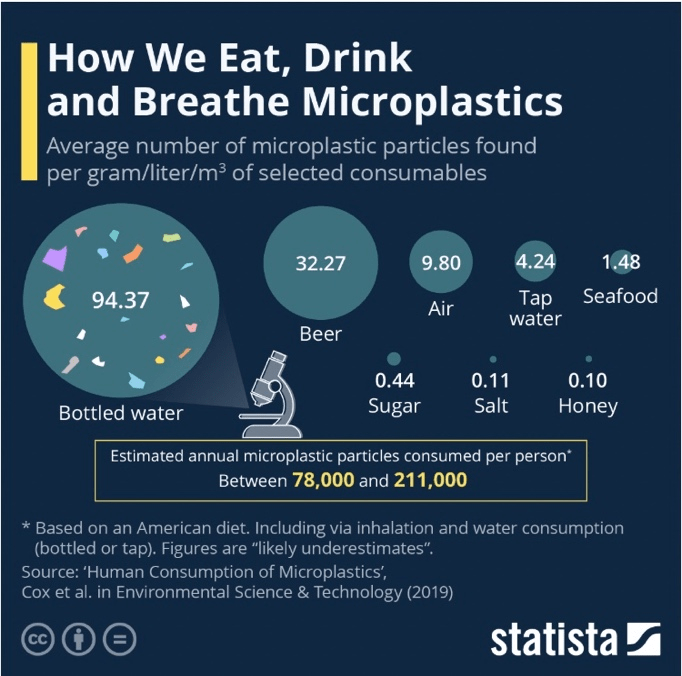
We would simply advocate that beach and island resorts avoid the use of plastic altogether.
Water in plastic bottles must be avoided, as can be seen in the chart alongside as it is the greatest source of microplastics found in human organs.
However, we also understand that in hotel operations this may not always be possible, but there are some practical ways that large quantities of plastic can be avoided:
- Eliminating all single-use plastics from hotel operations and provide biodegradable alternatives. Glass-bottled water is now offered by many hotels, with sustainability leaders bottling their own water on site as an alternative to imported water, avoiding the carbon footprint of transport, and importing toxic chemicals into the destination.
- Remove all plastics from the laundry and housekeeping operations by using reusable cloth bags or paper packing for all personal and hotel linen laundry.
- Procurement departments are playing an increasingly important role by engaging with suppliers to remove plastic (or any unwanted packaging material) from their products before delivery. (It should be noted that the CS3D now mandates supply-chain disclosure).
These simple steps collectively remove thousands of plastic items from polluting habitats on a weekly basis.
4. Regeneration of Native Biodiversity
Resorts can enhance their surroundings and biodiversity through simple methods, most of which can be initiated in the landscaping design phase and which then form maturing habitats well into the future.
- Planting native species that are well adapted to local conditions and therefore require minimal maintenance, while they add support for dependent, local wildlife species.
- Protect habitats which specifically nurture endangered or threatened species, including reef-dependent fish, sea turtles, and nesting coastal and migrating birdlife.
- Restore mangroves which act as natural storm barriers and are breeding grounds to a wide range of marine and coastal species.
- Regular removal of invasive plants which alter the local environment and suppress native species, and do not provide the necessary shelter or food sources for local species.
5. Meaningful Guest Experiences & Advocating for Responsible Tourism
Hospitality is all about creating guest experiences, and this should extend well beyond the boundaries of room service, the resort reception desk or the beach bar.
Resorts have the ability of extending guest experiences through activities which enrich and educate them about their environment, while at the same time highlighting the work and efforts being made to conserve and nurture the nature around them. At a time when travellers are increasingly aware of the environmental impact, our experience shows that resorts build loyalty, trust and higher levels of guest satisfaction through these activities.
- Guided tours that educate travellers about the local environment and species. Providing guests with information on why collecting shells or buying certain handcrafts (such as coral trinkets) may be damaging to the environment are sure ways of raising and communicating awareness.
- Guest participation in ongoing conservation and regeneration projects builds interest and learning, a respect for the destination they are visiting and self-respect.
- Expose the guest to similar-minded, local, responsible businesses or cultural organizations which are making a difference within the destination.
These experiences leave guests with memories that deepen their connection to the destination, and to becoming life-long advocates for the environment and responsible tourism.
A Commitment to the Future
Resorts which commit to sustainability, low environmental impact and the conservation of their habitats and biodiversity create value well beyond their annual turnover and balance sheet.
As we see more extreme weather and greater environmental risks these resorts are creating environmental stability and nature-based buffers which protect them from these risks.
At Destination-360 we specialize in designing and managing resorts which prioritize environmental protection. From developing renewable energy systems to creating policies for nature reserves, our work ensures that luxury and sustainability go hand in hand.
Together, we can protect these breathtaking ecosystems and redefine what it means to travel responsibly.
Let’s turn sustainability into your strongest competitive advantage. Ready to get started?
Reach out to us at http://Destination-360.com